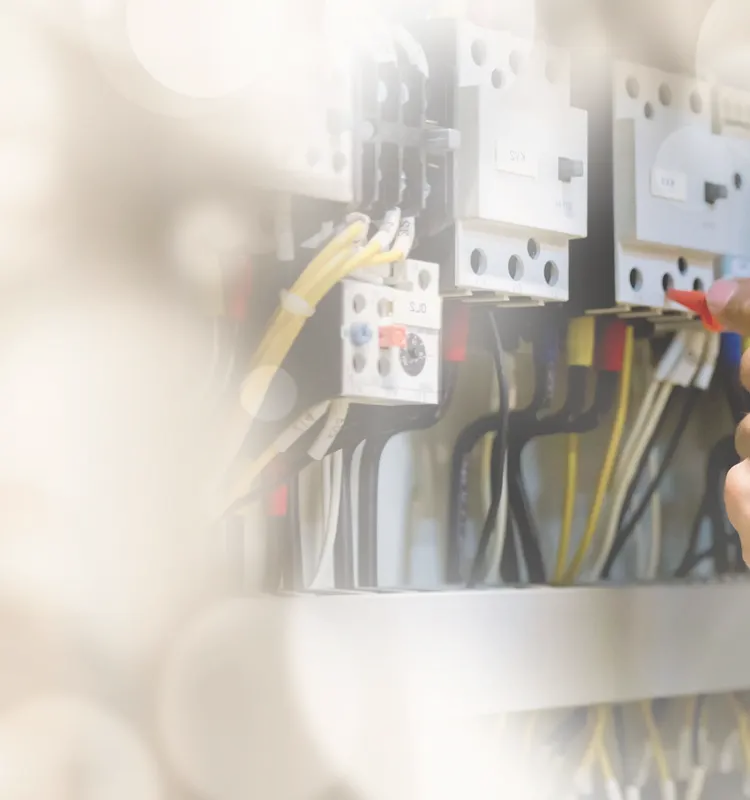
The electrical contractors in Denver who work Englewood homes spend a lot of time inside houses built in the fifties and sixties - houses where the panel still carries the original service capacity, outlets run two-prong, and a single circuit covers what are now two or three separate rooms. Spotting a breaker that will not reset or an outlet warm to the touch is where the call starts, and expert electrical panel upgrade work is often where it ends.
Homeowners here call a local electrician because the house itself shapes every job - what is under the floor, where the panel sits, and how many decades the wiring has been in place all change what the work actually involves.
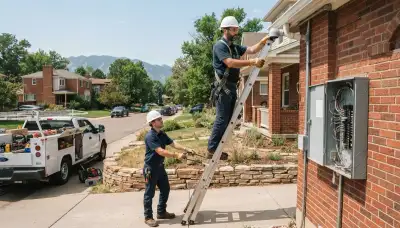
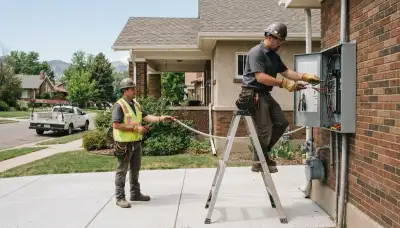
Knowing Englewood Homes Changes How the Work Gets Done
A local electrician working in Englewood knows that most of these houses went up in the fifties and sixties, that the panel is usually in the basement, and that the wiring reaching the upper floors has been in place long enough to show its age in ways a first visit makes plain.
Two kinds of work come up repeatedly in Englewood: panels that have run out of room for the loads added over the decades, and circuits that trip the moment a second appliance runs. Homeowners across Littleton, CO deal with similar conditions in houses of the same era.
Getting a problem looked at early keeps a nuisance from becoming a hazard that shuts down part of the house at the worst possible time.
Electrical Work Matched to How Englewood Homes Are Built
An approach that works in a newer house with a slab foundation and an accessible panel often does not translate to a two-story Englewood home with a finished basement, because running a new circuit means deciding whether to open walls or route through the floor system.
Homes here range from compact brick bungalows where every wall is load-bearing to wood-frame two-stories where the basement panel is reachable but the upper-floor runs are tight. Detached garages on older lots add outdoor wiring that has aged separately from the house. Professional electrical wiring work accounts for all of it before the first wire is pulled.
Four services come up often in Englewood homes: quality GFCI circuit installation near sinks and in ungrounded areas, reliable outlet repair for two-prong and warm-to-the-touch outlets, specialist ceiling fan installation in rooms that lack a switched overhead circuit, and professional generator installation for homes that want a backup when the power goes out.
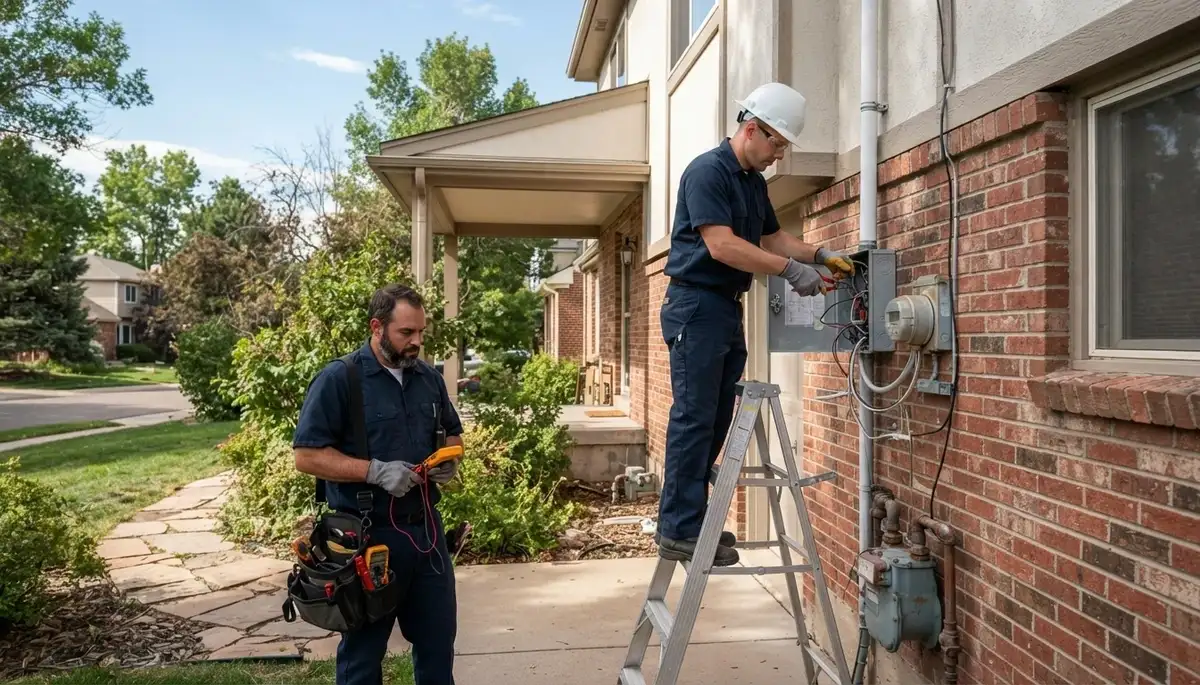
What the Age of Englewood Homes Still Decides Today
Most of the houses in Englewood went up in the fifties and sixties. At that time, a sixty-amp service was standard, grounding was not required, and a kitchen circuit covered the whole room. Those three facts still shape nearly every electrical job in these houses: the panel is undersized for today's loads, the outlets are two-prong, and the kitchen trips when two appliances run at once.
The Panel Has No Room Left
A homeowner notices it when every slot in the breaker box is taken and the electrician has nowhere to add a circuit. Behind that full box is a service sized for a house that did not have central air, a dishwasher, or a second refrigerator. Left alone, the only option becomes tandem breakers stacked into slots not rated for them.
Local electricians replace the panel and bring the service up to what the house is actually running. The new box has room to grow, and each circuit carries the load it was sized for.
Outlets Warm to the Touch
An outlet that feels warm when nothing is plugged in is not a minor inconvenience. In houses of this age, it points to connections that have loosened over decades or to aluminum wiring common in homes built in the late sixties and early seventies, where the metal expands and contracts at a different rate than the devices it connects to.
The correction involves inspecting every connection point, replacing devices rated for the wiring type, and confirming that no arc path has formed inside the box. Homeowners in Centennial, CO with houses from the same period face the same repair.
Two-Prong Outlets Through the House
Two-prong outlets mean the circuits behind them were run before grounding was required. Every three-prong adapter in use is carrying a load without the fault path that modern equipment expects. Over time, the ungrounded circuit becomes the path of least resistance for a surge or a fault.
Adding a ground where the wiring does not have one means running a new path back to the panel or installing the outlets with test and reset buttons that provide protection without a ground wire. Both options improve safety and let the homeowner plug in modern equipment without adapters.
The Service Was Never Sized for What Got Added
A car charger, a window air conditioner added to a bedroom, and a chest freezer in the garage each draw more than the original service anticipated. On a hot afternoon when the air conditioning is already running, starting the car charger pushes the panel past what it can handle, and a breaker trips. The panel was sized for a house with far fewer loads.
Adding a subpanel in the garage or upgrading the main service gives each new load its own circuit with the capacity it needs. The car charges overnight without tripping anything, and the kitchen and garage no longer compete for the same breaker.
Basement Panels and Finished Upper Floors
When the panel sits in the basement and the work is on the second floor, running a new circuit means choosing a path through finished walls or through the floor system. In a house with plaster walls and a finished basement ceiling, neither path is straightforward.
Local electricians plan the route before opening anything, use the floor system where it is accessible, and patch what they open so the work does not leave the homeowner with a repair project after the electrician leaves. The circuit gets where it needs to go without unnecessary disruption to the finished space.
Call (720) 966-1010 to arrange a no-pressure visit with a local electrician who can look at what the house has and tell the homeowner exactly what it needs.
On Call Electrical handles Englewood homes with work that holds from the first visit forward.

Full Electrical Services Available in Englewood, CO
The work below covers what homeowners in Englewood, CO ask for most. Find the item that matches the situation and reach out to get it scheduled.
Urgent Electrical Repairs Serving Englewood, CO
- Electrical Repair - A breaker that will not reset or a dead outlet in a house of this age needs a look before it becomes a larger problem.
- Outlet Repair - Warm outlets, loose outlets, and two-prong outlets that no longer hold a plug safely are common in houses built in this era.
- Switch Repair - A switch that sparks, feels warm, or controls nothing at all is a sign the connection inside the box has failed.
- Fire Alarm Installation - Older homes often have smoke detectors that are past their service life or positioned where they cannot do the job.
- Electrical Service - When the service coming into the house is undersized or damaged, everything downstream runs at risk.
If any of these match what the homeowner is seeing, the right move is to get it looked at now rather than after it gets worse.
Panel, Capacity, and Wiring Work in Englewood, CO
- Electrical Panel Upgrade - Houses built in the fifties and sixties were wired for a fraction of what they carry today; a panel upgrade brings the service in line with the actual load.
- Electrical Panel Installation - A panel replacement puts a new box in place with the capacity and the room for circuits the house needs going forward.
- Electrical Wiring - Wiring that has been in place for sixty years can develop faults that are not visible from the outside but show up in how the circuits behave.
- New Construction Wiring - Additions and garage conversions need wiring run from scratch, sized for the new space and tied correctly into the existing panel.
- Electrical Contractor - A full-scope electrical job in a house of this age needs someone who has worked in houses built this way before.
These homes were wired for a different era. Bringing the panel and circuits up to what the house is running now is the foundation everything else builds on.
Safety and Protection Services in Englewood, CO
- GFCI Circuits - Kitchens and bathrooms in houses of this age were not wired with the outlets that have test and reset buttons; adding them closes a gap that has been there since the house was built.
- Whole Home Surge Protection - A single surge can reach every circuit in the house; whole-home protection stops it at the panel before it gets to the appliances.
- Lightning Surge Protection - A direct or nearby strike sends a spike through the service entrance that unprotected panels pass straight to the wiring inside.
- Home Electrical Inspections - A house that has not been inspected since it was built may have conditions the homeowner cannot see from any outlet or switch.
- Smoke Detector Installation - Detectors placed where the house was built to have them may not be where they need to be for the way the house is used now.
Safety work in Englewood homes is not about adding features - it is about closing gaps that have been in the house since it was built, before one of them causes a problem the homeowner cannot fix after the fact. A local electrician can walk through the house and name exactly what needs attention.
Lighting, Outdoor, and Added-Load Work in Englewood, CO
- Recessed Lighting Installation - Older homes rarely have overhead lighting in living rooms or bedrooms; adding recessed fixtures means running a new circuit from the panel.
- Landscape Lighting - Outdoor wiring on lots of this age is often undersized or has been spliced and re-spliced over the years.
- Electric Car Charger Installation - A dedicated circuit sized for a car charger keeps the garage from tripping the panel every time charging starts.
- Ceiling Fan Repair - A fan that wobbles, hums, or has lost a speed setting in a house of this age often has a wiring issue at the box, not just a mechanical one.
- Security Lights - Motion-activated lighting on detached garages and back lots needs wiring that can handle outdoor exposure over the long term.
Englewood homes are being asked to carry loads they were never designed for. Adding the right circuits and outdoor wiring in the right way keeps the house running without the panel becoming the limiting factor for everything the homeowner wants to do.