
On Call Electrical
Call Us Now! (720) 966-1010

Attic Fan Installation and Repair Across Denver

Denver homes built from the fifties through the eighties carry panels sized for far lighter loads, and adding an attic fan means knowing exactly what the service can handle.

Call Us Now or Request a Free Quote

(720) 966-1010

Attic Fan Work Done Right for Denver Homeowners

Attic fan installation in Denver starts with the house itself. Most homes here went up between the late forties and the early eighties, and the panels in those houses were sized for a load that looked nothing like today's. Electrical contractors serving Denver know that adding an attic fan to a house from that era means checking the panel first, not last. If your breaker box has no empty slots, the fan circuit has nowhere to land, and that calls for professional electrical panel upgrade work before anything else goes in.

Denver houses from the fifties and sixties were built with basements, and the panel typically lives on a basement wall. Running a new circuit up through finished floors and into the attic takes longer than a straightforward garage installation, and the path the wire takes matters for code. Postponing the work means the attic keeps building heat through the cooling months, and the existing circuits carry that extra strain on a service that was never sized for central air, car charging, or the workshop tools that now share the same box. A qualified home energy audit can show exactly where that load is concentrated before the attic fan circuit gets added.
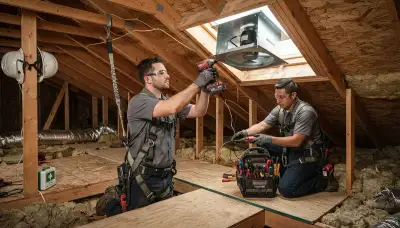
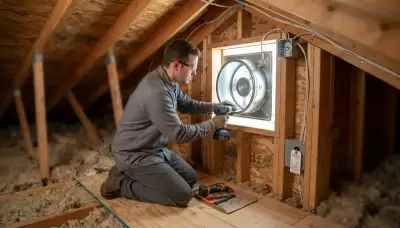
Electrician installing an attic fan in a Denver, CO homeDenver, CO electrician installs and wires an attic fan in a residential gable wall opening

What type of electrical project is this?
  • TCPA Compliance
  • Comodo SSL Certificate
  • True Trust

What Local Contractors Handle Around Attic Fan in Denver Homes

Attic fan work rarely stands alone. These four services come up alongside it in houses around Denver, each one addressing something the attic fan job tends to surface.

Panel Capacity for Older Denver Houses

A house built in the fifties or sixties with its original panel often has no room for a dedicated attic fan circuit. Contractors assess what the box can handle and whether the service needs to be brought up before the fan is wired in.

Check Panel Capacity

Whole House Fan Options for Denver Homes

Some homeowners weighing an attic fan find that a specialist whole house fan installation pulls more air through the house and works better with the way Denver houses are laid out, particularly in two-story wood-frame homes with a central stairwell. Contractors can walk through both options.

Explore Whole House Fan

Electrical Wiring in Houses Built This Way

When contractors open walls or ceilings to run a new attic fan circuit, what they find inside tells the story of the house. Wiring from the sixties and early seventies sometimes turns up as aluminum, which needs specific handling at every connection point before the new circuit is safe to energize.

Review Electrical Wiring

Outdoor and Detached Circuits Around Denver Properties

Detached garages and workshops common to Denver properties on standard lots often share a feed from the main panel that was sized decades ago. Adding an attic fan to the house sometimes reveals that the outdoor run to the garage is already at its limit. Expert landscape lighting and other outdoor circuits added over the years can push that feed past what it was built to carry.

Address Outdoor Circuits

On Call Electrical
Request a Free QuoteCall now(720) 966-1010

How Load Shifts Through the Year for Attic Fan Work in Denver

The same house carries a different electrical demand in each season, and those shifts determine when an attic fan earns its keep and when the service feeding it shows the strain.

Spring Attic Fan Readiness for Denver, CO

Spring is the right window to schedule attic fan work in Denver before cooling demand climbs. Panel slots get checked, circuits get added, and any outdoor or pool equipment circuits coming back into use get inspected at the same time. A house that needs panel work before the fan goes in has time to get it done without pressure.

Schedule Spring Attic Fan

Summer Attic Fan Demand Across Denver, CO

A panel sized in 1962 running central air through a long summer is already working at the edge of what it was built for. Add an attic fan pulling on the same service and the load picture changes fast. Reliable ceiling fan installation on upper floors can share that demand, but the panel still needs to be able to carry the total. Summer is when an undersized service stops hiding.

Schedule Summer Attic Fan

Fall Attic Fan Service for Denver, CO

Fall is the handoff point. Cooling winds down, heating starts up, and anything the attic fan circuit revealed about the panel over the summer is still there waiting. Fixing a tight panel or a marginal connection in the fall means the house goes into the heating months with the electrical side in order, not carrying a problem into the next season.

Schedule Fall Attic Fan

Winter Attic Fan Inspection for Denver, CO

Winter stacks electric space heaters, holiday lighting strings, and the furnace blower onto circuits that were never designed to carry all of it at once. A house with an attic fan already installed and properly circuited has one fewer variable in that mix. One that still needs the work done is running the rest of winter on a panel with no margin left.
Schedule Winter Attic Fan

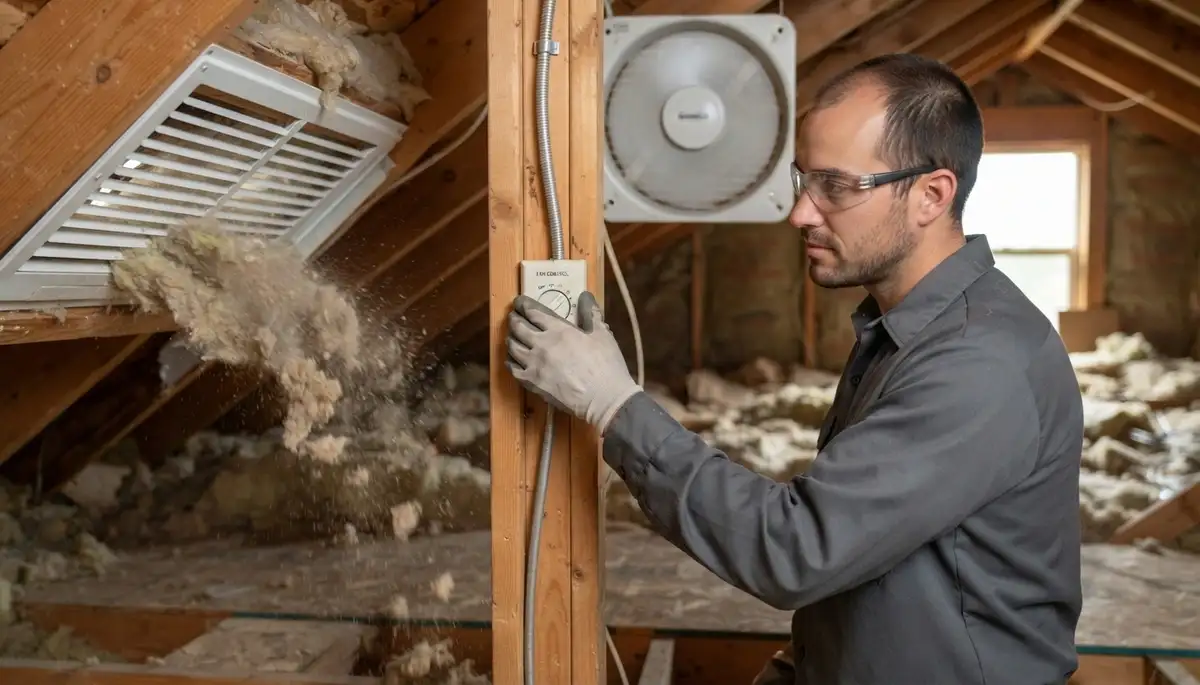
Denver, CO electrician adjusting an attic fan thermostat and checking airflow through soffit vents

Finding the Right Electrical Contractor in Denver Homes

Electrical Contractors Serving Homes Across Denver, CO

On Call Electrical connects homeowners across the Greater Denver area with local electrical contractors, from the older established neighborhoods of Arvada to the newer subdivisions of Centennial. Wherever the home is located, professionals serving the area are ready, and coverage does not depend on which part of the area the home sits.

Homes throughout Denver, including the outlying properties on larger lots around Morrison, have access to local electrical contractors ready to help, no matter where in the region the house sits.

Electrical Contractor Service Areas and Zip Codes Across Denver

Browse the zip codes and neighborhoods where the electrical contractor team provides fast repairs and upgrades across the Denver area.

  • Downtown Denver / LoDo, CO (80202)
  • Capitol Hill, CO (80218)
  • Cherry Creek, CO (80206)
  • Highlands / Highland, CO (80211)
  • Washington Park, CO (80209)
  • Park Hill, CO (80207)
  • Wheat Ridge, CO (80033)
  • Glendale, CO (80246)
  • Cherry Hills Village, CO (80113)
  • Westminster, CO (80031)
  • Commerce City, CO (80022)
  • Arvada, CO (80002)
  • Thornton, CO (80229)
  • Littleton, CO (80120)
  • Lone Tree, CO (80124)
  • Golden, CO (80401)
  • Morrison, CO (80465)
  • Henderson, CO (80640)
  • Broomfield, CO (80020)
  • Superior, CO (80027)
  • Centennial, CO (80112)
  • Lafayette, CO (80026)
  • Brighton, CO (80601)
  • Erie, CO (80516)
  • Aurora, CO (80012)
  • Englewood, CO (80110)

Connect with a dependable professional near you and get the work done right.

  • Free estimates
  • Vetted professionals
  • Quick response

Electrical Contractor FAQs for Denver, CO Homeowners

An electrical contractor in Denver, CO sees homes from early bungalows to newer subdivisions, so these answers cover urgent problems, what the work involves, modern load capacity, typical cost, and finding local help.

  • A warm outlet is not something to wait on, especially in Denver homes with older fuse boxes or original wiring. Turn off that circuit at the panel, unplug what is connected, and avoid the outlet until checked. Local electricians in the area offer around-the-clock emergency response, and a warm outlet with a burning smell means calling now, not morning.

  • Work usually starts with a load assessment of the panel, then mapping the new circuit path through the basement joists rather than opening finished walls upstairs. Here in Denver, homes with finished basements sometimes need a section of ceiling opened to fish wire, which adds time beyond a simple run. Permit and inspection follow once the work is complete.

  • A breaker that trips occasionally is inconvenient, but an outlet that feels warm, a discolored switch plate, or a burning odor near an older panel is a different story across Denver. That heat at a connection can start a fire, while flickering lights on one circuit alone can usually wait for a scheduled visit.

  • On Call Electrical gathers details about the problem and the house, then matches the homeowner with local contractors who work on homes around Denver. Comparing written estimates side by side shows whether one includes a load assessment or permit costs another leaves out. Looking at scope, not just price, separates a solid quote from one that skips steps.

  • Adding central air to Denver's older homes usually means checking whether the panel has amperage left, since many of these houses were wired before central cooling was common. A load assessment shows whether the current service can handle the new compressor alongside everything else already running. Often the panel needs an upgrade before the air conditioner goes in, not after.

  • The service size is printed on the main breaker inside the panel, usually found in the basement here in Denver. Many older houses still run on 60 or 100 amp service, enough for lighting and a few appliances but little else. A 200 amp panel gives modern rooms and equipment room to run without tripping breakers.

  • Many homes across Denver near the historic core were built in the early 1900s through the 1930s, while whole neighborhoods of ranch houses went up through the 1950s and 60s. That earlier group often still has knob and tube wiring or two-prong outlets, and the ranch-era group carries 60 or 100 amp panels predating central air.

  • The price depends on the service size, how accessible the wiring is behind older plaster walls, and whether existing branch circuits in Denver homes can be reused. A basement panel that is easy to reach costs less to swap than one buried behind finished walls. Comparing quotes on scope, not price alone, shows which contractor priced the job right.
